
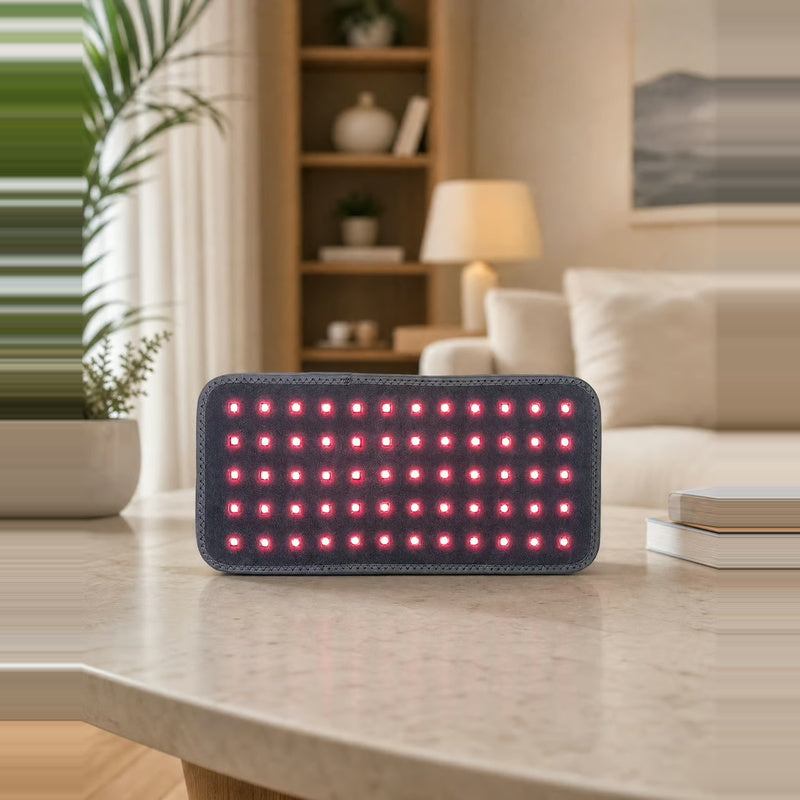
Joint discomfort is another area where photobiomodulation has attracted scientific interest.
Researchers have investigated red and near-infrared light for different types of musculoskeletal pain, including knee osteoarthritis.
A 2024 systematic review and meta-analysis examined ten randomised placebo-controlled studies involving 542 people with knee osteoarthritis. The researchers found that photobiomodulation reduced pain intensity compared with placebo, but they rated the certainty of the evidence as very low because of limitations and difference between studies.
That means the results are promising, but they should be interpreted carefully.
Photobiomodulation should not be considered a cure for arthritis or other joint conditions, and it should not replace appropriate medical assessment or treatment.
Instead, some people may choose to explore light therapy as a complementary part of a broader wellbeing or recovery routine.
Glowrite's red light therapy belt provides a portable option for targeted areas, while our panels and mat offer different approaches depending on the area you want to work with.
The right device depends on your intended use, the size of the treatment area and the manufacturer's recommended protocol.
If you have persistent, severe or unexplained joint pain, speak to a healthcare professional before relying on any home therapy.
Red light therapy is best considered as one possible tool within a wider approach to managing your wellbeing.
The evidence is developing, and continuing research will help establish where photobiomodulation can provide the greatest benefit.

Leave a comment
This site is protected by hCaptcha and the hCaptcha Privacy Policy and Terms of Service apply.